
Daily publishing for news-driven niches and hyper-competitive SEO
If your work lives where trends move fast—music industry updates, creator economy news, YouTube policy changes, AI tool rollouts—daily publishing can be a smart, short-term accelerator. When I grew my own traffic as a freelance musician turned SEO specialist, I learned that freshness wins attention in crowded conversations. Daily posts plant flags on emerging keywords before big sites fully mobilize. They also compound internal links quickly, which boosts crawl frequency and topical trust.
But let’s get real: daily posting is demanding. The only way this cadence works without eating your life is to build a system that does the heavy lifting. Start with tight keyword lanes—think of them as mini “beats.” For creatives, I love beats like “gear reviews for home studios,” “short-form content monetization,” or “music lesson business tips.” Each beat should have a rolling backlog of 20–40 micro-topics. Spend Mondays batching research and briefs, Tuesdays drafting, Wednesdays shooting images or short clips, Thursdays editing, and Fridays scheduling while updating internal links.
Daily doesn’t mean long. Aim for 600–1,000 words per update with a clear angle: what changed, why it matters, how to act now. Reserve heavy editorial time for weekly or monthly anchors you can link to from your daily posts. And because I’m anti–hustle culture, I recommend treating daily as a sprint in 4–6 week windows, followed by a 2–3 week “maintenance” block focused on refreshing, pruning, and repackaging the best pieces. That rhythm keeps your business aligned with your life, not the other way around.
Workweek rhythm: five posts per week for media-style growth without burnout
Publishing five days in a row creates a drumbeat your audience learns to expect. It’s media-style momentum without the relentless edges of daily news. For creative business owners who want aggressive growth but still value evenings off and weekends for family or gigs, the workweek rhythm is golden.
Here’s how to make it sing. Start with a theme-of-the-week (for example: “student retention,” “pricing your offers,” or “YouTube SEO for artists”). Draft a Tuesday anchor article—1,800+ words, evergreen, supported by screenshots, examples, and a step-by-step framework. Monday, Wednesday, Thursday, and Friday posts become supporting riffs: a case study, a quick tip, a template breakdown, and an FAQ. Interlink them tightly so readers can binge the entire set, and so search engines see a cohesive cluster.
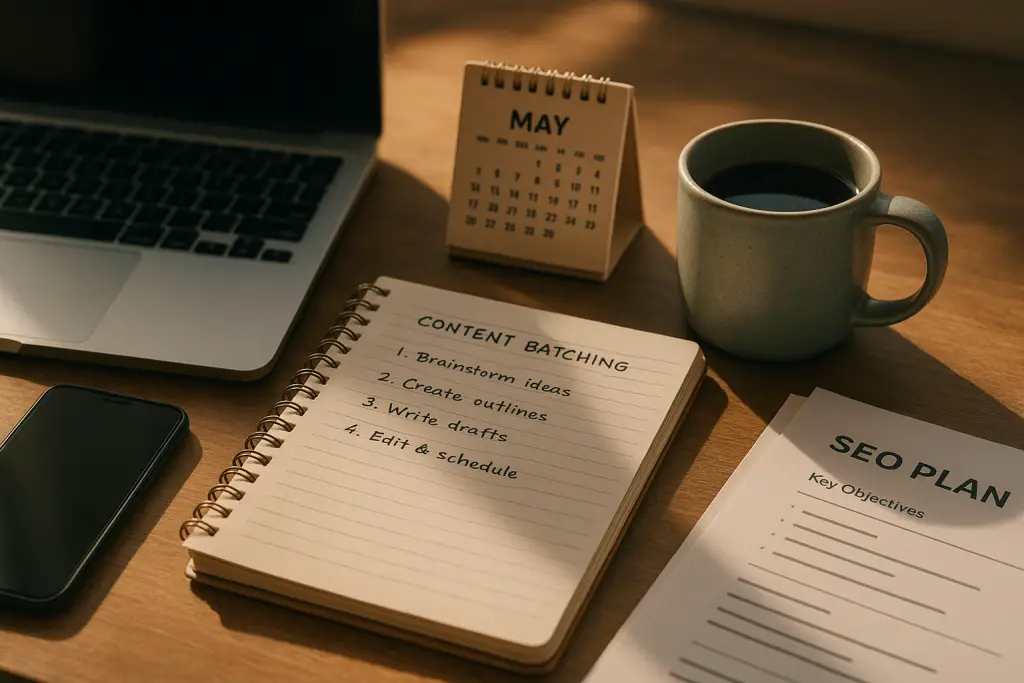
To avoid burnout, lean into content batching. I batch briefs for four weeks at once, then batch outlines the next week. Recording quick audio notes as you teach or coach is a secret weapon—transcribe, clean up, and you’ve got half your article written in your own voice. Sprinkle in AI for outline ideation, headline variants, and social snippets, but keep your hands on the wheel for final edits. People-first content wins over copy-paste any day.
Three posts per week to accelerate topical authority and internal linking
Three posts a week is the cadence I recommend most often to clients who want strong SEO without turning their business into a content factory. With three solid pieces, you can devote more time to research, examples, and visuals—things that actually improve rankings and conversions.
Think in trios. Every Monday, publish an “Opportunity” piece: a practical tutorial your audience can use immediately (“Set up your music lesson SEO in 90 minutes,” “Map a 30-day content plan for your Etsy shop,” “Automate your student onboarding”). On Wednesday, ship a “Depth” article: long-form, loaded with screenshots or audio clips, explaining the why behind the tactic. Friday, drop a “Proof” story: a mini case study or teardown showing the results and the mistakes. This trio approach naturally multiplies internal links and keeps your readers on site longer, which is a healthy signal for SEO.
From a batching standpoint, outline all three posts in one sitting so your transitions and cross-links feel intentional. Then draft Monday’s tutorial first, because it clarifies gaps you need to fill in the Wednesday explainer. The moment all three go live, add cross-links both ways and embed a simple navigation block at the top of each article so readers can jump across the set. That small UX touch increases pages per session and turns your site into a learning destination.
Twice-weekly cadence for sustainable SEO momentum on a small creative team
For a duo or tiny team—maybe you and a VA—twice-weekly hits the sweet spot between momentum and capacity. It’s also the perfect bridge for creatives phasing from fully booked services to a mix of services and digital products. Here’s the cadence I walk clients through:
- Early week: publish a practical, SEO-targeted how-to or checklist that solves a painful, searchable problem.
- Late week: publish either a long-form guide or a refreshing update to a high-potential post that’s slipping in the rankings.
This pattern moves you forward while protecting your past wins. Because you’re only producing two pieces, each one deserves more care: original screenshots, small data points, and detailed examples from your studio, shop, or client stories. Keep a living internal link table in your content doc. Every time you publish, add three to five contextual internal links to older posts and revisit at least one older article to link forward to the new piece. That ongoing cross-stitching helps search engines understand your expertise and distributes authority where it’s needed.
Once-a-week evergreen cadence that prioritizes people-first quality over quantity
If you’re teaching lessons, producing music, or managing client projects, weekly is often the most sustainable, high-ROI cadence. One great evergreen post per week can outrank five thin posts over time, because depth, originality, and usefulness are the real levers in SEO. When someone asks me, “How often should you blog?” my first counter-question is, “How consistently can you ship something truly helpful?” For a lot of creatives, weekly is the honest answer.
Design a simple, repeatable flow. Monday: research and outline. Tuesday: draft. Wednesday: add examples, visuals, and internal links. Thursday: final edit and on-page SEO (title, meta description, headers, alt text, FAQ section). Friday: publish and promote. Protect the integrity of the post by anchoring it to an audience outcome. You’re not writing about “SEO for blogs” in the abstract—you’re writing about how a violin teacher can fill a fall studio in 6 weeks with search-friendly lesson pages and a few targeted articles.
Because weekly posts carry weight, map each one to a product or offer. If you sell a mini course or template pack, add an unobtrusive CTA that promises a next step, not pressure. Sustainable businesses are built on trust, and trust comes from consistently helpful content that respects your reader’s time.
Every-other-week deep-dive cadence for solo creators with limited bandwidth
Some seasons are heavier than others. Maybe you’re touring, launching an album, or teaching intensives. In those seasons, a biweekly deep dive keeps your SEO engine warm without draining your creative energy. Think 2,000–2,500 words, rich with original images or audio, a tight structure, and a “save-able” checklist or template.
Here’s where content batching becomes your best friend. Spend one day every month drafting briefs for four deep dives. Block a second day to outline all four, including internal links you plan to add and posts you’ll refresh in parallel. Then draft one per week, even if you’ll publish only two that month. Front-loading the work reduces stress and gives you cushion when life happens.
To squeeze even more juice from each deep dive, create a companion piece for a different platform. Turn the main article into a podcast outline with timestamps. Or film a step-by-step screen share while you’re writing—now you’ve got material for YouTube and short clips for social. The SEO benefit is indirect but real: cross-platform content boosts brand searches, which correlate with stronger rankings over time.
Monthly flagship guide plus supporting updates to compound rankings
If your service or product is seasonal—or if your audience is busy and prefers slow, thorough learning—a monthly flagship can be a powerhouse. One mega-guide per month, consistently updated and linked to by a cluster of smaller posts, can sit at the top of your niche for years. I’ve watched clients hold #1–#3 positions on competitive terms with nothing more than disciplined monthly flagships and a smart refresh plan.
Think of the flagship as your “pillar” and the supporting updates as “satellites.” The pillar covers the full journey: definitions, use cases, step-by-steps, mistakes to avoid, examples, and a short toolkit. The satellites go deeper on subtopics—pricing models, onboarding emails, lesson policy scripts, editing workflows, channel-specific SEO tips. Each satellite links back to the pillar with a specific anchor (not just “click here”), and the pillar links out to each satellite in the right section.
Monthly flagships benefit from a clear editorial calendar. Map 12 topics that align with your revenue goals—studio enrollment cycles, launch windows for your courses, holiday gift searches for your products. Then layer in your content batching days: research in Week 1, draft in Week 2, design assets in Week 3, publish and promote in Week 4. That rhythm leaves headspace for your art, your students, and your life.
Sprint-and-maintain cadence: batch 8–12 posts, then optimize and refresh
Want rapid growth without a forever grind? Try a two-phase sprint-and-maintain cadence. In the sprint, you batch 8–12 posts tightly scoped to a single topic cluster—say, “YouTube SEO for music teachers” or “booking private gigs for wedding season.” Publish them over 3–4 weeks. The goal isn’t perfection; it’s coverage. You’re staking a claim across the questions your audience types into search.
Then comes the maintain phase—just as important. For the next 4–6 weeks, publish fewer net-new posts and put the bulk of your time into polishing the sprint set. Add original examples. Improve intros and conclusions. Fine-tune on-page SEO. Consolidate overlapping articles. Build a comparison table if it clarifies a choice. Most importantly, study which pages start ranking and funnel internal links toward them from relevant older content.
This cadence mirrors what I teach clients who want to escape hustle culture: work in focused, purposeful waves. The sprint creates momentum and useful imperfection. The maintain phase turns good into great—without adding more to your plate. You’ll feel calmer, your audience will have a cohesive learning path, and your SEO will thank you.
Refresh-first 60/40 cadence to counter content decay and protect rankings
Here’s a truth too many creators learn the hard way: content decays. Rankings slip, competitors update, screenshots age, and what worked last spring might not hold this fall. If your site already has 50+ posts, consider a refresh-first cadence: 60% of your publishing slots go to updates and only 40% to new content.
Start by building a refresh scoreboard. Track each article’s primary keyword, current rank, traffic trend, and last updated date. Flag anything that’s dipped two or more positions in the last 60–90 days or lost 20%+ traffic. Refresh priority posts first: update intros to match current search intent, add new examples, replace outdated steps, expand thin sections, and rework titles/meta for clarity. While you’re in there, improve internal links—both outbound to your newer material and inbound from related posts.
I also like to add a short “Updated on [Month YYYY]” note to major guides. It signals freshness to readers and helps you stay accountable. Pair each refresh with lightweight distribution: a newsletter mention, a short video walkthrough, or a social post highlighting what changed. You’ve already done the hard work; let the update earn a second life.
Seasonal and launch-aligned cadence mapped to offers, keywords, and demand spikes
Creatives don’t operate on a flat calendar. There are recital seasons, holiday sales, enrollment windows, festival circuits, and product launches. Aligning your blogging cadence with those spikes turns SEO into a sales partner, not a separate chore. I call this the “calendar-aware cadence.”
Work backward from key dates. If your studio fills in August, you’ll want enrollment content ranking by July—which often means publishing in May or June to allow time for indexing and link-building. If you sell a holiday template pack, seed your supporting content by late September. If you’re launching a course in April, publish January and February articles that address precursor problems the course solves, and a March flagship that becomes the cornerstone for your pre-launch content.
This is where content batching becomes almost unfair. In one planning day, map your keywords to the calendar, outline the top 6–8 pieces, and assign each to a production week. Then build small assets as you go—lesson screenshots, pricing calculators, email scripts. You’ll never again scramble to write a post the night before a launch. And because your articles arrive when people are already searching, your SEO lifts your conversion rate instead of just your traffic.
—
Before you pick your cadence, ask the questions that actually matter: What can you sustain for 12 weeks? Where does your audience’s demand naturally spike? And how can you use batching to protect your creative time? As a musician and SEO coach, I’ve seen every permutation—from daily news bursts to quarterly flagships—work beautifully when they’re anchored in people-first quality, internal linking, and a refresh habit.
To help you decide quickly, here’s a simple comparison you can screenshot and revisit when you plan your next quarter.
No matter which path you choose, remember the bigger goal: a sustainable business that supports your art and your life. Your blog isn’t just content—it’s a system that works while you teach, perform, or take a day off. Choose the cadence that fits your season, batch like a pro, and let SEO compound the effort you make today into the freedom you want tomorrow.