
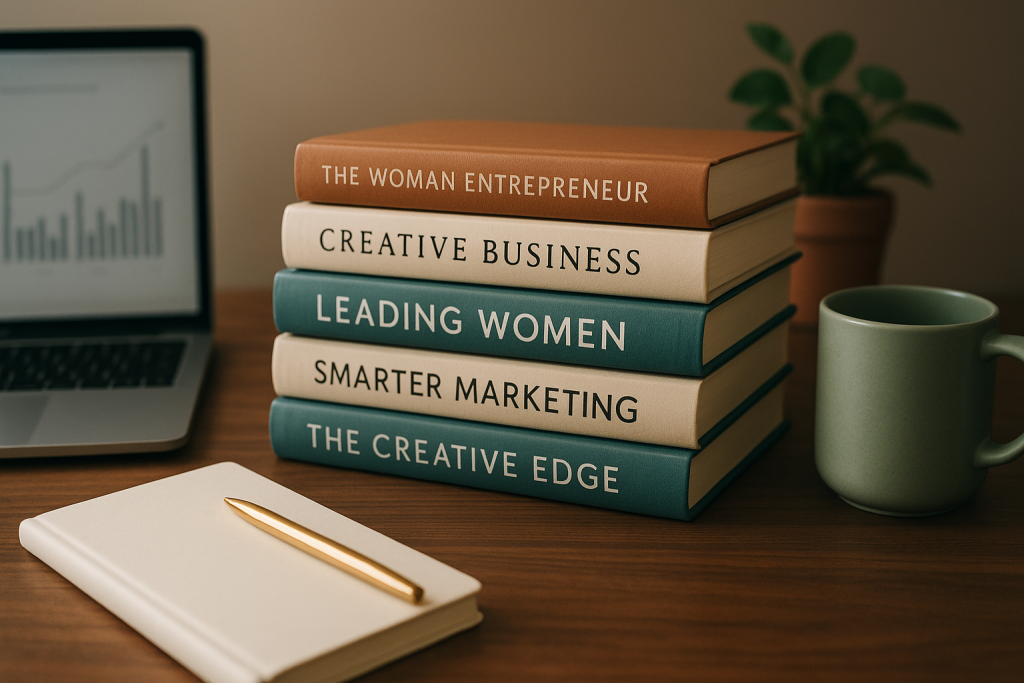
Introduction: Why these reads matter for creative women building sustainable businesses
If you’re a creative woman trying to turn your craft into a business that actually supports the life you want, reading the right books can be a game changer. Books give you frameworks, case studies, and mindset shifts you can return to again and again—without the pressure of a 24/7 hustle. These are not just motivational pep talks; they’re practical guides that teach money systems, product ideas, marketing approaches, and the emotional work of being an entrepreneur. As someone who helps creatives build sustainable online businesses, I picked these titles to help you move from scattered hustle to steady, creative income.
These selections speak directly to the challenges creative online business owners face: inconsistent client work, overwhelm from marketing, and the need to build passive or repeatable income that doesn’t drain your creative energy. Read them with the aim of extracting one experimentable idea from each—something you can test in the next 30 days—and you’ll turn reading into revenue.
How we chose these books — criteria grounded in sustainability, creativity, and actionable business systems
I chose books that meet three practical filters. First, they offer sustainable frameworks—tactics you can repeat without burning out. Second, they’re relevant to creatives: they respect craft, creativity, and the non-linear path of artistic businesses. Third, they provide concrete, actionable systems: pricing and sales strategies, productization ideas (courses, templates, bundles), and marketing techniques that play nicely with organic discovery and SEO. Expect a mix of mindset work, financial clarity, marketing tactics, and product-building guides—each selected so a creative entrepreneur can apply the lessons to build passive streams like courses, templates, and evergreen offers.
—
A curated set of 10 essential reads for female entrepreneurs
Below you’ll find ten books that together cover leadership and mindset, money and pricing, marketing and visibility, and productization for passive income. For each book I’ll summarize what it teaches, why it matters for creatives, and one practical way to apply its lessons to your business right now.
1) Book about creative confidence and practice
What it delivers: A fresh view on how to protect creative time, build a reliable practice, and treat artistic work like a repeatable skill. Creative confidence isn’t fluff; it’s the foundation of sustainable output.
Why it matters: If you don’t protect your time and craft, passive income is impossible—there’s nothing to productize.
Actionable takeaway: Schedule two 90-minute creative blocks each week and treat them as non-negotiable—use one block to create teachable content (a lesson, a template) and the other to create work for clients. Over one month you’ll have a draft course module plus a reusable template.
2) Book focused on pricing and value-based selling
What it delivers: Clear frameworks for pricing products and services based on value to the client, not hourly inputs. It also demystifies packaging and selling higher-ticket offers without sleazy tactics.
Why it matters: Creatives often underprice because they equate time with worth. Learning to price for transformation is essential for sustainable revenue.
Actionable takeaway: Reframe one offer using a value ladder—create three tiers (entry template, mid-level course, high-touch coaching) and write one value-centric sales sentence for each tier.
3) Book on marketing through storytelling and brand voice
What it delivers: Practical guidance on how to craft compelling stories that attract your ideal customer and stick in their memory.
Why it matters: Organic discovery depends on clarity and resonance—storytelling is the simplest SEO-friendly way to create memorable content that gets shared and links back to your site.
Actionable takeaway: Draft three content ideas that tell a short customer story: the problem, the turning point, and the result. Optimize each for one keyword you own on your site.
4) Book about building systems and workflows
What it delivers: Specific systems for turning repetitive business tasks into automated or delegated processes, freeing creative time.
Why it matters: Sustainable businesses run on systems—templates, evergreen funnels, automated email sequences—that make passive income possible.
Actionable takeaway: Pick one repetitive task (client onboarding, course delivery emails) and build a single templated workflow you can copy and reuse.
5) Book on launching and productizing your expertise
What it delivers: A step-by-step approach to validate ideas, build a minimum viable offer, launch with confidence, and scale without constant launches.
Why it matters: Creatives need low-friction ways to turn their skills into products: short courses, downloadable templates, or recurring memberships.
Actionable takeaway: Create a short pilot (a 20-minute masterclass + one worksheet) and offer it to 10 past students or clients for feedback and pre-sales.
6) Book covering money mindset and financial systems for entrepreneurs
What it delivers: Practical finance habits, budgeting for freelancers, and ways to separate business revenue into predictable buckets.
Why it matters: Passive income grows fastest with good money systems—clear pricing, forecasting, and allocation for taxes and growth.
Actionable takeaway: Create three bank accounts or ledger categories: Taxes, Operating, and Growth/Investment, and decide a percentage allocation for each incoming payment.
7) Book about audience-first marketing and content funnels
What it delivers: Techniques to build an audience that naturally converts into buyers using email, content upgrades, and small consistent offers.
Why it matters: For creators, audience equals future customers. Building an audience through content also helps SEO and long-term organic traffic.
Actionable takeaway: Create one content upgrade (a checklist or mini-template) for your next blog post and use it to collect emails.
8) Book on leadership and boundaries for creatives
What it delivers: Advice on setting boundaries, saying no to projects that don’t fit your business, and leading a small team or collaborators compassionately.
Why it matters: Sustainability is not just systems—it’s preserving your creative capacity through boundaries and deliberate project selection.
Actionable takeaway: Write a short client-fit questionnaire that helps you screen out misaligned work and prioritize projects that support your lifestyle goals.
9) Book about small-business growth without burnout
What it delivers: Case studies and strategies focused on scaling slowly and intentionally—adding products, recurring revenue, and steady marketing instead of chasing the next big launch.
Why it matters: Slow scales are more durable for creative businesses. This perspective helps you grow while keeping creative energy intact.
Actionable takeaway: Map your current revenue sources and choose one to transform into a recurring or passive model in the next 90 days.
10) Book specific to SEO and content visibility for creatives
What it delivers: SEO fundamentals tailored for non-technical creatives—keyword selection for service pages, how to structure blog content, and simple technical checks.
Why it matters: Organic visibility compounds. For creatives who want clients to find them without constant paid ads, SEO is the long game that pays off.
Actionable takeaway: Pick one high-intent phrase related to your main offering and write a 1,200–1,500 word blog post optimized for that phrase with a content upgrade.
—
What each book delivers — leadership, money systems, creative practice, marketing, and mindsets
Practical ways to use these books to grow a creative, SEO-friendly online business
Reading is only useful if you apply it. The real power of these books is turning their advice into repeatable actions that feed your creative business and improve your discoverability online. Start by extracting one implementable idea from each book—one price change, one product, one automation, one content piece—and schedule the work in a 90-day plan. That discipline alone can convert reading into measurable results.
Turning lessons into products: courses, templates, and passive revenue aligned with your lifestyle
Many of these books emphasize productization: turning what you already teach or do into something you can sell on repeat. For creatives, the simplest path is tiered: a low-cost template or checklist, a mid-priced mini-course, and a higher-ticket coaching container or done-with-you service. Use a short pilot to validate demand, then create a lean sales page and an evergreen funnel. When combined with basic email automation and one evergreen piece of SEO content, this funnel will keep generating leads without daily promotion—exactly the kind of recurring income that helps you escape hustle culture.
Quick SEO and content strategies inspired by the books to improve discoverability and organic growth
Several books here outline audience-first content systems—great for SEO. Start by mapping a small keyword cluster around what you do (e.g., “songwriting templates for indie artists” or “photography pricing templates for weddings”). Create one pillar page that teaches the topic, then write two supporting posts that answer specific questions or solve tiny problems. Use internal links between them, add a content upgrade, and promote the pillar in your email list and social channels. Small, consistent efforts like this compound: three months of focused content can significantly increase organic traffic and inbound inquiries.
—
Turning lessons into products: courses, templates, and passive revenue aligned with your lifestyle
Quick SEO and content strategies inspired by the books to improve discoverability and organic growth
How to prioritize which books to read first based on your business stage and biggest pain points
Not every book will be equally useful at every stage. If you’re just validating an idea, start with the productization and launch-focused reads—those will help you test quickly. If money and pricing keep tripping you up, lead with pricing and finance books. If you feel scattered and overworked, pick the systems and boundaries books first. Below is a short roadmap to guide your reading order based on where you are:
Reading roadmap: validating ideas, launching first offers, and scaling sustainably
- If you’re validating ideas: read the launch/productization book and the creative-practice book to produce and test fast.
- If you have an offer but no customers: read the marketing/storytelling and audience-first marketing books to sharpen how you attract people.
- If you’re making irregular income: read pricing and financial systems books to stabilize cash flow.
- If you’re burned out or juggling too much: read the systems and leadership books to create sustainable cycles and boundaries.
- If you’re ready to scale: read the slow-growth and SEO books to build durable visibility and recurring revenue.
This roadmap is intentionally flexible—pick two to start (one practical, one mindset) and commit to finishing them within a month. Apply one idea from each book as you go.
—
Reading roadmap: validating ideas, launching first offers, and scaling sustainably
Next steps: Action checklist to convert reading into measurable business progress
Knowing what to do after reading is where many creators stall. Here’s a short, practical checklist you can follow after finishing any of these books, designed to convert learning into measurable business outcomes.
Simple experiments, content prompts, and timeline for testing book-based strategies
- Choose one implementable idea from the book and write a one-page plan describing the goal, the metric you’ll track, and the timeline (30–90 days).
- Create one deliverable that maps to that idea: a pilot course module, a template, a pricing page rewrite, or an email sequence.
- Run a small test with a friendly audience: offer it to past clients, email subscribers, or social followers for feedback or pre-sale.
- Track three metrics: sign-ups, conversion rate, and time-to-delivery. Keep the experiment small—your goal is learning, not perfection.
- If the test converts, standardize it: write workflows, templates, and an evergreen sales path so the offer runs without constant manual work.
If you want a concrete example: take the SEO book’s advice, pick a keyword related to your service, write one long-form post, add a content upgrade, promote it in one email, and measure leads after 30 days. That single experiment could be the start of a passive funnel that matches your lifestyle goals.
—
Simple experiments, content prompts, and timeline for testing book-based strategies
Conclusion: Bringing creativity and sustainability together — applying these books to escape hustle culture
Books are compound interest on your thinking. When you read strategically—choosing books that teach systems, pricing, marketing, and healthy leadership—you create a knowledge bank that fuels real business change. For creative online business owners who want to escape hustle culture, the right mix of mindset shifts and small, repeatable systems is the only reliable path to sustainability.
Start small: pick two books that match your biggest pain points, read them with a notepad, and pull one experimentable idea from each. Build a 90-day plan around those experiments, measure results, and iterate. Over time, those small changes add up into a business that supports both your creative life and your financial goals.
If you want help turning one of these book takeaways into an SEO-ready blog post, a mini-course outline, or a simple evergreen funnel, I’ve got templates and tutorials that make the process quick and low-stress—so you can spend more time creating and less time hustling.