
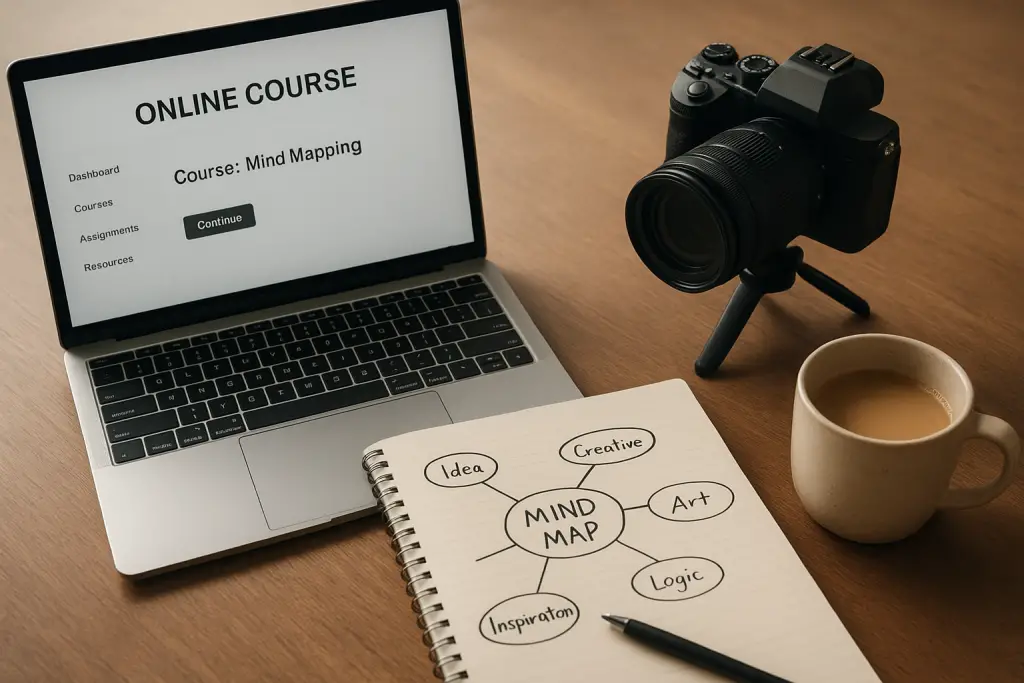
How to Turn Coaching Into Passive Income: Create Online Courses for Creative Businesses
Why Turning Coaching into Courses Creates Passive Income for Creatives
Coaching is powerful—but it can also be exhausting when your revenue depends on showing up live for every client, every week. When you turn your coaching framework into an online course, you keep the impact and remove the ceiling. Suddenly, your best material serves dozens or hundreds of students while you get your evenings back for art, music, family, or that passion project you’ve been postponing.
As a professional musician and SEO specialist who coaches creative entrepreneurs, I’ve seen this shift unlock real passive income for creatives who were stuck in hustle mode. Courses give you leverage. You package your method once, create systems that enroll students while you sleep, and focus your live energy where it counts—community calls, small-group hot seats, or premium VIP coaching. Your income becomes more predictable. Your schedule becomes sane.
There’s also a sneaky benefit: productizing your coaching forces clarity. To teach at scale, you must define the transformation, outline your path, and strip away the noise. That clarity doesn’t just sell courses—it also makes your 1:1 coaching sharper and easier to fulfill. Ready to build something sustainable that pays you even when you’re offline? Let’s map it out step by step.
Start with Lifestyle Goals and the Transformation: Tonya Lawson’s Sustainable Approach
Most course-creators start with content. I start with a calendar. If your course succeeds but produces a life you don’t want, that’s not success; it’s just a new trap with a prettier name. So we begin with your lifestyle targets: How many hours per week do you want to work? When do you want to be fully offline? What revenue do you want from passive products versus coaching? Once we anchor those numbers, we can reverse-engineer a course that fits your life.
Next, define the transformation. A strong course doesn’t promise “knowledge”—it promises a before-and-after. For creative businesses, think outcomes like “book five new design clients in 30 days,” “land your first paid gallery show,” or “rank your Etsy shop on page one for three target keywords.” Keep it specific, measurable, and achievable without your constant presence. This is how we build passive income for creatives that actually feels passive.
Define the specific creative niche, learner outcome, and success metrics
Niche down until your audience feels seen. “Artists” is too broad. “Illustrators who want recurring brand work” is better. “Children’s book illustrators landing their first agency contract” is best. When you name a niche that specific, your examples, templates, and case studies snap into focus.
For success metrics, choose 2–3 that directly reflect the transformation. If your course helps photographers book higher-priced packages, metrics might be “average booking value,” “number of discovery calls per week,” and “close rate.” Your modules and assignments will line up behind moving these numbers. When students see quantifiable gains, they finish, rave, and refer.
Validate Demand Before You Build: Fast Tests That Preserve Your Energy
There’s no prize for having the prettiest course that nobody buys. We validate first, then build. I like to run quick tests that give you proof without months of production. Start with a short interest survey to your email list and social audience. Offer three outcome-focused options and ask which problem they’re hungry to solve right now. Keep it scrappy; the goal is signal, not perfection.
Then look for willingness to pay. Soft interest is cheap. Real interest has a credit card attached. A mini paid workshop (90 minutes with two Q&A breaks) is perfect here. You’ll teach the skeleton of your method live, gather questions, and invite attendees to join a waitlist for the full course. Even a small turnout can validate the outcome and highlight any confusing steps. If you’re not ready for live yet, test a low-ticket digital product—like a template pack or a starter kit—that previews your process and includes a waitlist CTA. The data you gather becomes your curriculum map.
Run a paid pilot or workshop, capture a waitlist, and pre-sell to confirm fit
I’m a fan of the paid pilot. Cap enrollment at 10–20 students, price it below your intended full-course price, and deliver the core modules live over four to six weeks on Zoom. Record everything. You’ll hear language you can reuse in your sales page, and you’ll watch where students get stuck so you can adjust the curriculum. Midway through, invite them to lock in lifetime access to the polished, self-paced version at a founders’ price. If 30–50% pre-buy, you’ve got product-market fit.
Set up a simple waitlist page with a concise promise, a deadline, and social proof. A bare-bones version can live on your website with a single call to action. Keep the copy outcome-focused and concrete: “Book your first 5 mural clients in 60 days with my repeatable outreach system.” When you later open enrollment, this audience is primed—and you’ll launch without shouting on social every day.
Turn Your 1:1 Coaching Framework into a Repeatable Curriculum
If you’ve coached even a handful of clients, you already have a method. It may live in your head, notes, and DMs, but it exists. Pull up three recent client wins and trace how you got them there. List the phases, decisions, and tools. That’s your spine. Now condense each phase into a module with one clearly defined milestone and two to four lessons. Each lesson should have a single objective and a concrete action a student can complete in under an hour.
Think in systems, not lectures. Templates, checklists, and scripts do more heavy lifting than long videos. A social content calendar for a ceramicist who sells workshop seats is more valuable than a 30-minute philosophy talk about brand voice. And don’t be afraid to repeat your best assets. If your “Pitch in 5 Lines” email script works for artists and copywriters, adapt the examples and include it in both places. Reuse is how you scale.
Build accountability without depending on you being live. I like short “progress checkpoints” at the end of each module with two questions: What did you ship? What number changed? Students upload a screenshot of their action—the new portfolio page, the SEO title and meta description they wrote, the email they sent—and log the metric tied to your outcome. This is how you drive real results without constant hand-holding.
Produce Bingeable, Accessible Lessons Efficiently (With AI-Assisted Workflows)
Production shouldn’t take over your life. Aim for tight, bingeable lessons—6 to 12 minutes each—paired with a worksheet or template that gets students moving. I script by outlining bullets, recording a rough run-through, and letting AI help me tighten the transcript into concise copy for captions and summaries. Tools that turn transcripts into lesson notes, timestamps, and key takeaways will save you days. Use that time to polish your examples and templates, not to re-record the same line ten times.
Accessibility is non-negotiable. Add closed captions, provide transcripts, and design worksheets with legible fonts and high contrast. Many creatives in your audience will be working from mobile; keep your downloads lightweight and your lesson pages clean. Remember: accessible content isn’t just ethical—it also improves completion rates and discoverability. Search engines can parse transcripts, which helps your course-related pages rank for terms your students actually use.
Batch your production. Record multiple lessons in one sitting, then move into an editing day, then a packaging day. Keep your background consistent, use the same intro and outro bumpers, and name files predictably so they’re impossible to lose. If perfectionism creeps in, set a simple rule: if a student can complete the task based on this video and worksheet, it ships. You can always update later—and you should.
Pick the Right Platform and Pricing Model for Predictable Revenue
You don’t need the fanciest platform to generate passive income for creatives. You need a stable, searchable home for your course, a checkout that converts, and analytics you’ll actually look at. Choose a platform that supports structured modules, downloadable resources, built-in captions or transcript uploads, and simple coupons for promotions. Integrations with your email service and payment processor matter more than fancy community bells and whistles.
Pricing should align with your lifestyle goals and the transformation you promise. For skills that drive immediate revenue—like booking clients or raising rates—students expect to invest more. For identity or creative mindset courses, you may opt for a lower price with a higher volume focus. Always anchor price to outcome and support. Self-paced with minimal support? Lower price, all evergreen. Self-paced plus monthly group coaching? Higher price, cohort windows a few times per year. VIP tier with 1:1 feedback? Price that for your calendar and cap the seats.
Here’s a quick comparison to help you choose a pricing approach that supports sustainability:
Price testing is part of the process. Start where you’re confident, then raise after each cohort or milestone update. If you consistently sell out in hours, your price is too low. If you get engagement but slow conversions, test extended plans or a 14-day money-back guarantee. Keep experimentation simple and evidence-based.
Build an Evergreen Enrollment Engine: SEO + Lead Magnet + Email Automation
This is where my SEO brain lights up. You don’t want launches to be your only sales driver. You want a steady stream of ideal students finding you, joining your list, and enrolling—even when you’re not posting on social. That means building an evergreen engine with three parts working together: search, a relevant freebie, and an automated email path.
On the search side, create a cluster of content around your course’s transformation. If your course helps illustrators land agency work, target phrases like “how to get an illustration agent,” “illustrator portfolio examples,” and “email pitch for art agents.” Write long-form guides that teach and naturally point to your lead magnet—a portfolio checklist, a pitch script, or a mini case study. Optimize titles, meta descriptions, and headers so your posts actually rank, and interlink them so readers stick around.
Your lead magnet should be the first step of your course, not a random freebie. If the course helps photographers raise their average booking value, the freebie might be a “High-Value Package Builder” with plug-and-play add-ons and a pricing calculator. The more your magnet creates motion, the better your email sequence will perform, because students will feel progress before you ever make an offer.
Then connect the dots with a short, high-value email sequence. Day one: quick win using the freebie. Day two: story and soft proof (a student result tied to your metric). Day three: teach a common mistake and show your method. Day four: invitation to join the course with a bonus expiring in 72 hours (like a template pack or a live kickoff call). Keep it conversational. Use the same language your students used in your pilot. And always include reply prompts—conversations improve deliverability and conversions.
Launch Without the Hustle: Simple Marketing Assets, Soft Open, and Iteration
When you’re ready to open doors, skip the loud mega-launch and aim for a soft open that respects your energy. Start with the waitlist you built during validation. Give them first access and a founders’ bonus. Then widen the circle: your email list, your blog readers, your podcast listeners. Use two or three core assets—a clear sales page, a short video walkthrough of the course experience, and a handful of targeted posts that focus on outcomes and stories rather than hype.
Your sales page should read like a guided conversation. Lead with the transformation, show the milestones, include screenshots of templates and lesson titles, and share 2–3 detailed testimonials that speak to different student types. Add an FAQ that reduces risk: “How much time does it take weekly?” “What if I don’t have an audience yet?” “Can I get feedback?” Clarity sells, and it also reduces refunds because students know what they’re buying.
Keep the calendar light. A single live webinar or workshop during your launch window can work wonders, but it doesn’t need to be a daily circus. Record it once, and use it as an evergreen training later. After doors close (if you’re running a cohort) or after the initial promo window ends (for evergreen), audit what worked. Which emails got replies? Which objections stalled people? Use those insights to improve the assets, not to push yourself harder.
Scale Beyond a Single Course: Bundles, Memberships, and Community
Once your flagship course runs smoothly, expansion becomes fun. The simplest move is a bundle: package your course with complementary templates, a niche mini-course, or a workshop replay. For example, if your main program helps copywriters raise retainers, add a “Negotiation Scripts” mini-course and a client onboarding template pack. Bundles lift average order value without adding live delivery.
If your audience craves ongoing support, consider a membership. Keep it lean: monthly workshops, a fresh template, and a short Q&A. Protect your time by setting a consistent cadence and clear boundaries. Think seasons—open enrollment for a week each quarter—and a lightweight community space that’s searchable and easy to moderate. Your course becomes the on-ramp, and your membership becomes the home base.
You can also add a premium tier with limited VIP access. This might include 1:1 audits, a private Slack thread, or quarterly strategy calls. Price it so it respects your calendar. I like to cap VIP seats to keep delivery delightful, not draining. Remember, the goal is sustainable passive income for creatives, not another treadmill you can’t step off.
Measure What Matters and Stay Sustainable: Analytics, Accessibility, and Updates
Data keeps your course healthy. Track three categories: traffic, conversions, and student outcomes. For traffic, watch organic search pages that send the most subscribers. Double down on those topics with updated posts and internal links. For conversions, monitor opt-in rate on your lead magnet pages, open and click rates on your welcome sequence, and sales page conversion percentage. A few small lifts—clearer headlines, tighter CTAs, social proof placed near pricing—compound beautifully over time.
For outcomes, return to the success metrics you set earlier. Add a simple pre-course and post-course survey that captures baseline numbers and results. Celebrate wins publicly (with permission) and use this data to refine lessons. If 40% of students stall on Module Two, that’s a signal to add a shorter video, a walkthrough, or a template that removes friction. Don’t guess; let your learners steer the updates.
Accessibility and maintainability matter more than flashy features. Schedule quarterly checkups: review captions and transcripts, confirm that links and downloads work on mobile, and retire outdated examples. When software screens change, record a short “2026 update” clip instead of redoing a whole module. Your students will appreciate timely fixes over perfection. And yes, keep an eye on SEO: refresh older content with new examples, and add internal links to keep your ecosystem tight and discoverable.
Before we wrap, here’s a brief, practical checklist you can skim anytime you’re stuck:
- Define the transformation and success metrics tied to a specific creative niche. Validate demand with a paid pilot or workshop and capture a waitlist. Turn your live framework into modules with tight lessons and action-first templates. Produce accessibly—captions, transcripts, mobile-friendly assets—and batch your creation. Choose a pricing model that fits your calendar and the outcome you promise; test and iterate. Build your evergreen engine with SEO content, a relevant lead magnet, and a short, value-packed email sequence. Launch softly, learn fast, and expand into bundles, memberships, or a VIP tier only when the flagship runs on rails. Measure traffic, conversions, and outcomes; update lightly and consistently.
If you’re feeling the pull to step off the hustle hamster wheel, this is your path. You already do the work one client at a time. Package it. Systematize it. Let it scale while you reclaim your creative energy. That’s the heart of passive income for creatives—money that supports your art, your students, and the life you actually want.