
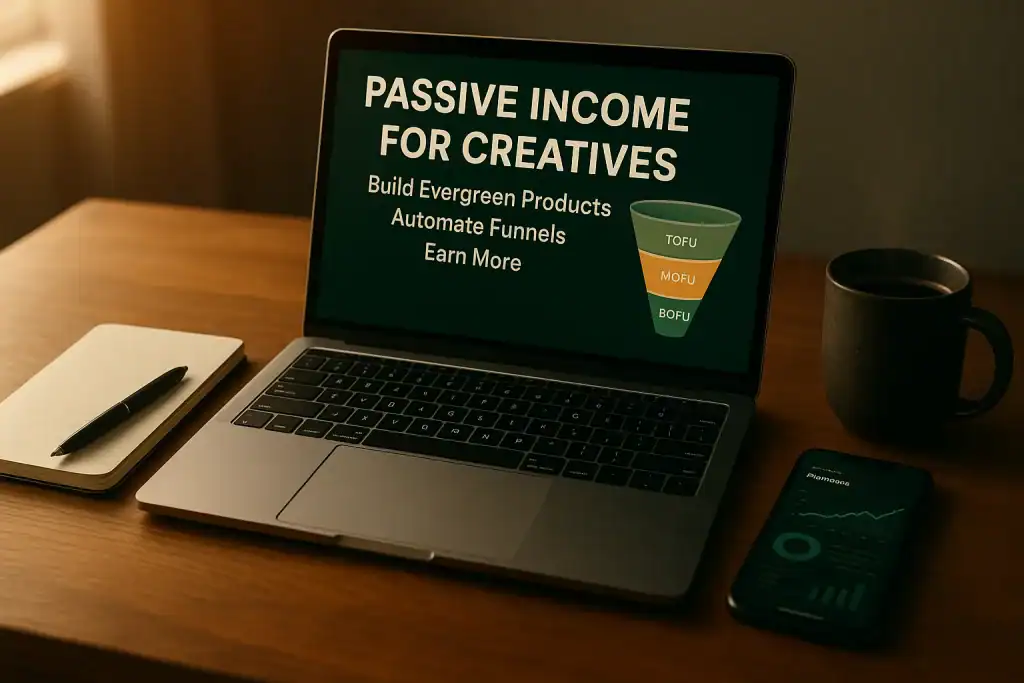
Introduction: Why passive income for creatives is different and attainable
Imagine waking up to payment notifications for a course you recorded last year, or seeing a steady stream of subscribers download a template you made between gigs. That’s not a pipe dream — it’s the reality of building passive income for creatives. Unlike traditional passive-income advice aimed at investors or tech founders, creative passive income leans on one thing you already own: your craft and the unique way you teach it. You don’t need to become someone else. You need systems that let your expertise keep working for you while you compose, rehearse, teach, or create.
If you’re a musician, private teacher, illustrator, photographer, or creative educator, your schedule and inbox probably look familiar: feast-or-famine gig cycles, a constant pressure to post on social, and the nagging worry that a cancelled booking means lost rent. The strategy I teach—the same approach I use with coaching clients—centers on creating evergreen products, automating funnels, and using simple SEO to make your offerings discoverable. The result is a lifestyle-friendly business that funds creativity, not one that consumes it.
Read on and you’ll get a practical, step-by-step guide to picking the right evergreen product, packaging it to convert, automating the sales process, and making it discoverable without grinding social media every day.
Why creatives should prioritize evergreen products over gig-only income
Gigs pay the bills now, but they don’t build equity. An evergreen product—something you create once and sell repeatedly—gives you leverage. A single well-made course, template pack, or membership can replace dozens of one-off teaching hours or underpaid performances. That shift matters because it buys you time, artistic freedom, and predictable cash flow.
There are three big reasons creatives benefit from evergreen products. First, scalability: your time is finite, but digital products aren’t. Second, control: you choose your schedule and what to sell, and you can iterate without a gatekeeper. Third, compounding visibility: as your product lives longer on the web, it accumulates reviews, testimonials, and organic traffic—so promotion gets easier over time.
But “evergreen” doesn’t mean passive from day one. It demands craftsmanship: thoughtful product design, clear positioning, and systems that reduce ongoing maintenance. For musicians and educators who’ve spent years crafting skills and lesson plans, packaging that knowledge into a product is simply another creative effort—one with a much better ROI.
How to choose and design evergreen products that sell without constant promotion
Picking the right product starts with one central question: what repeatable problem do you solve for your audience? Think of common friction points your students or fans mention. Is it learning to sight-read, booking studio time efficiently, creating practice routines that stick, or building a lesson plan for beginner violinists? Your best evergreen product targets a narrow, urgent problem and gives a clear path to a result.
Work from what you already have. That voice memo full of tips, the lesson syllabus you use every term, a backlog of exercises, or a signature arrangement are raw materials. Turn them into structured, bite-sized lessons, downloadable templates, or a membership with layered guidance. For musicians and creative educators, the obvious product formats that scale include online courses, repeatable templates and cheat sheets, membership communities, and licensing packs (sheet music, stems, presets). Each format fits different goals: a course can command a higher one-time price, templates and cheat sheets are ideal for quick conversions, and memberships create steady monthly revenue.
Design the product to reduce friction. Short, focused modules work better than sprawling curricula. Include clear outcomes and timelines—“Learn this routine in 30 days,” or “Set up your home studio in a weekend.” Use short videos, downloadable PDFs, and a simple onboarding checklist. Accessibility matters: captions on videos, printable resources, and an easy-to-follow progress path make it easier for customers to complete and recommend your product.
Think about the delivery model early. Will you host on a course platform, sell from your website, or use a marketplace? Hosting on your site paired with an email funnel gives you control and ownership—critical for long-term SEO and sustainable growth. For creatives who value independence from social platforms, owning the experience and the email list is the fastest route to freedom.
Product types that scale for musicians, educators, and makers:
- Courses
- Templates
- Memberships
- Licenses
Packaging, pricing, and offer tiers that convert creative audiences
Packaging is where a product stops being a pile of information and becomes a purchase people want to make. Your packaging needs to answer three buyer questions instantly: What will this do for me? How quickly will I see results? Is this worth the price?
Start with a single flagship offer that demonstrates clear value. For example, a “Studio in a Weekend” course for home recording or a “30-Day Practice System” for piano students. Then create two supporting tiers: a starter tier for lower cost, higher volume (templates, quick courses), and a premium tier for deeper transformation (group coaching or done-for-you services). Tiers give people an easy path in and a logical upgrade if they want more help.
Pricing should reflect perceived value, not just time spent. For many creatives, a mid-tier course priced between $97 and $497 sells well; premium coaching or group programs can sit in the $997+ range. If you’re offering high-value templates or licensing assets, consider a subscription option for ongoing access and updates. Psychological pricing helps: emphasize the monthly equivalent of a one-time cost, show the cost of not solving the problem, and include a short guarantee or refund window to reduce friction.
Packaging copy matters: use benefit-first language, concrete outcomes, and social proof. A short video from you explaining who the product is for and what students will achieve works wonders—people buy from people, especially creatives who want a human connection.
Automating funnels and systems so your product sells while you create
A practical evergreen funnel uses three zones: traffic, conversion, and retention. For traffic, prioritize content you can own—your website and YouTube channel—and supplement with collaborations, guest posts, and podcast interviews that send people back to your site. For conversion, build a single, optimized landing page for your lead magnet and one for the paid offer. For retention, create an automated onboarding flow and a membership or email drip that keeps customers engaged.
You don’t need expensive tools. A reliable setup for most creatives includes a website (WordPress, Squarespace, or a course-hosting integration), an email platform (many creatives start with ConvertKit or MailerLite), and a checkout system that supports digital deliveries (e.g., Gumroad, PayPal buttons, or integrated course platforms). If you’re selling a course and want to own customer data, choose a platform that allows CSV exports and integrates with your email provider.
Automating onboarding reduces refunds and increases course completion. Immediately after purchase, send a friendly welcome email with next steps, include quick wins in the first module, and prompt customers to join a private community (if you have one). Use simple analytics—open rates, click rates, and module completion—to see where people drop off and improve that part of the funnel.
A brief checklist can help you get started fast: create the lead magnet, build the landing page, set up the email sequence, connect checkout, and create a welcome module. Execute these five steps and your funnel will function as a perpetual selling machine while you focus on creation.
Make your offers discoverable: SEO, organic traffic, and low-effort promotion
Owning discoverability is the difference between a product that occasionally sells and one that reliably brings revenue. For creatives, SEO is a powerful alternative to endless social promotion because it compounds—pages rank, traffic grows, and you reap benefits long-term. Start with keyword-focused content that answers real questions your audience searches for, like “how to set up a home recording studio,” “practice routines for intermediate guitarists,” or “template for composing for film.”
A few practical SEO habits make the biggest difference. First, target long-tail keywords that show intent—people searching those phrases are ready to learn or buy. Second, write helpful, structured content that solves the searcher’s problem and naturally links to your lead magnet and course. Third, ensure your website is fast, mobile-friendly, and uses clear headings and meta descriptions so search engines and humans can scan your content quickly.
Organic traffic can be accelerated with low-effort promotion: repurpose a blog post into a short video, guest post on niche sites, or pitch a podcast that reaches your audience. Each content piece should funnel people back to that same lead magnet or landing page—consistency increases conversions. Don’t ignore simple on-page SEO like descriptive file names for downloads, alt text for images, and internal linking from older posts to your product page.
For many creatives, the cheapest and most sustainable marketing is an SEO-first blog plus an email list. It takes time to rank, but the payoff is durable: fewer frantic launches, more steady sales, and a business that supports your creative life.
Conclusion: A step-by-step action plan to launch an evergreen income stream
Ready to start? Here’s a compact, actionable plan you can complete in a few focused weeks. First, identify a single, painful problem your audience needs solved and pick a product format that fits your strengths. Second, design a minimal viable product—short modules, a downloadable template, or a tidy membership framework. Third, create a lead magnet closely related to the paid product and build a simple landing page with a signup form. Fourth, set up an automated email sequence that welcomes, teaches, and converts, and connect it to a checkout that grants instant access. Fifth, publish an SEO-optimized content piece that drives traffic to the lead magnet and repeat.
This approach is what I coach creatives to do when they want to escape the feast-or-famine cycle without abandoning their art. It’s practical, repeatable, and friendly to busy schedules. You don’t need to post every day on social media to sell out your offer—create something people need, make it easy to find, and let simple automation deliver it.
If you want a next step today, start by writing a one-paragraph description of the transformation your product offers—who it’s for, what result they’ll get, and how quickly. That paragraph becomes your headline, your landing page lead, and the spine of your funnel. From there, shape your lead magnet and start building the five-step funnel. Keep it small, ship quickly, and iterate based on what customers actually do.
Passive income for creatives isn’t about checking out of your career; it’s about building a sustainable platform that funds better art, steadier teaching, and more time for what you love. Start with one evergreen, automate the systems, and watch your creative business begin to support the life you want.