
What you need before you start a podcast for free
Starting a podcast doesn’t have to mean buying a pile of gear, locking yourself into expensive software, or building a giant launch machine before you’ve even recorded episode one. For creative online business owners, the better question is simpler: what do you actually need to make something consistent, discoverable, and worth listening to?
At the bare minimum, you need a clear idea, a repeatable format, a place to host your audio, and a way to distribute it. Spotify for Creators offers free hosting and distribution, along with analytics and monetization tools, while Apple Podcasts lets you submit a show through an RSS feed hosted elsewhere or through Apple’s own program. That means you can absolutely start lean and still publish widely.
Choosing a niche, format, and episode promise that fit a creative business
If your goal is to build a sustainable creative business, your podcast shouldn’t be a vague “talk about everything” project. It should feel like a useful extension of your expertise. Maybe you teach music production, photography, illustration, design, coaching, or another creative skill. The strongest shows usually make one clear promise: they help a specific listener solve a specific problem.
That promise matters because your audience isn’t looking for more noise. They’re looking for practical, trustworthy ideas that help them grow without falling into hustle culture. A focused show can speak directly to the pain points creative entrepreneurs feel most—keeping income steady, attracting the right clients, and building systems that don’t eat their whole week.
Your format can stay simple. A solo teaching show is often the easiest place to begin because it lets you turn what you already know into episodes quickly. You can also mix in interviews, short case studies, or question-and-answer episodes later. The key is consistency, not complexity. If you can define your audience, topic, and episode rhythm in one sentence, you’re on the right track.
Setting up a simple recording stack with free tools and a lightweight workflow
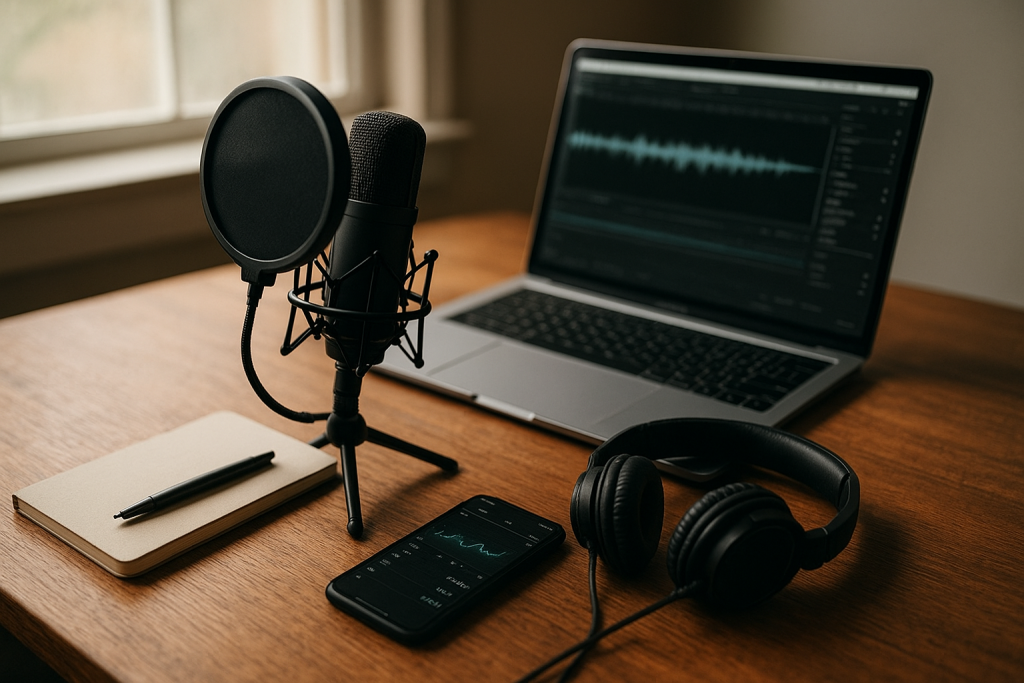
You do not need a studio to get started. A quiet room, a decent microphone, and a free or low-cost recording setup are enough for a first season. If you already own earbuds with a mic, that may be sufficient for a test run. The goal is to create clear, listenable audio—not perfection.
A lightweight workflow helps more than fancy gear does. Record your episodes in one block, save your files in a consistent folder structure, and keep a basic checklist for intro, body, outro, and export settings. If you’re already juggling a creative business, reducing decision fatigue is a real advantage. Systems save time, and time is what keeps the show sustainable.
Think in terms of repeatability. If it takes you three hours of confusion to make a 20-minute episode, you’ll eventually stop. If it takes you 45 minutes because your process is simple, you can keep going. That’s the difference between a fun idea and a real asset.
How to start a podcast for free and make it easy to find
A podcast that nobody can find is just a private audio diary. If you want your show to support brand visibility, your setup needs discoverability from the start. That means using search-friendly language in your show title, description, episode titles, and show notes. It also means giving listeners a reason to understand what they’ll get before they hit play.
Spotify for Creators emphasizes hosting, analytics, distribution, and growth tools, which makes it a practical option for creators who want to start free and keep the process simple. Apple Podcasts also validates shows during submission, so clean metadata and technical quality matter more than many beginners realize.
Creating an SEO-friendly show name, description, and episode topics
If you want your podcast to support SEO, think like a searcher. What would your ideal listener type into Google or Spotify when they’re stuck? “How to grow a creative business,” “podcast marketing for beginners,” “how to start a podcast for free,” or “how to get clients as a designer” are the kinds of topic angles that can bring in the right ears.
Your show name should be memorable, but it also needs context. A title that says exactly what the show is about often wins over something clever that no one understands. The same is true for your description. Use plain language. Explain who the show is for, what problems it solves, and what kinds of episodes people can expect.
Episode topics should be built like mini search answers. Instead of “My thoughts on creativity,” try “How to turn one skill into a simple digital offer” or “How to plan a podcast season without burning out.” That gives your content a clearer path to discovery and a clearer reason for someone to subscribe.
Recording, editing, and publishing your first episodes without paid software
Your first episodes don’t need to be perfect. They need to be finished. Record a short batch so you can settle into the sound of your own voice and reduce the pressure of making every episode a masterpiece. Then trim the obvious mistakes, remove long dead air, and export the file in a standard format your host accepts.
When you’re publishing for the first time, keep the structure simple: a short intro, a useful main section, and a clean outro that tells listeners what to do next. That might mean visiting your site, joining your email list, or checking out a related free resource. The point is to make each episode do a little bit of business work for you.
One of the biggest beginner mistakes is trying to make the podcast do everything. Don’t. Let the episode teach, let the website capture the traffic, and let your other content support the rest. That keeps the show from becoming a one-person hamster wheel.
How to publish your show on major platforms using an RSS feed
The RSS feed is the engine behind podcast distribution. It’s what lets platforms read your show, pull in your episodes, and display them in podcast apps. Spotify for Creators allows free hosting and distribution, while Apple Podcasts lets you submit a show through a third-party RSS feed or through Apple Podcasts Connect if you’re in the Apple Podcasters Program.
For a creator who wants to start lean, this is good news. You don’t have to manually upload every episode to every platform. You set up the feed once, then let the ecosystem do the work.
Submitting and validating your show on Spotify for Creators and Apple Podcasts
If you host with Spotify for Creators, you can publish from there and take advantage of its free hosting, analytics, and monetization tools. Spotify also notes that creators who host with other platforms can claim their shows in Spotify for Creators by entering the podcast’s RSS feed and verifying ownership.
On Apple Podcasts, submission happens through Apple Podcasts Connect. Apple says you can add a new show with an RSS feed, and the submission process includes technical validation. That validation checks for required tags, cover art, and media files, and passing it doesn’t automatically guarantee approval.
So what should you actually do? Make sure your feed email is accessible, your cover art is correctly formatted, your episode files are uploaded, and your metadata is clean before you submit. If Apple rejects something, it’s often a technical issue rather than a creative one. That’s frustrating, sure, but it’s also fixable.
Checking your artwork, metadata, and distribution before launch
Before launch day, check your artwork at a small size. If your title disappears on a phone screen, it needs work. Then review your episode titles, descriptions, and author name for consistency across platforms. Weird mismatches can make a show feel unfinished, even when the content is strong.
Distribution is also where many creators get impatient. They publish the episode and expect instant visibility. But podcast apps need time to process feeds, and some shows require manual claiming or verification. Spotify for Creators specifically notes that shows can be claimed through an RSS feed and verified through an email code, which is a reminder that ownership and accuracy matter.
A simple pre-launch check can save you hours of cleanup later:
How to monetize a free podcast without building a huge audience first
Monetization doesn’t have to wait until you have a massive audience. In fact, a smaller, highly relevant audience can be more valuable than a large one that doesn’t care what you do. For creative entrepreneurs, a podcast can support income through services, coaching, affiliate partnerships, and digital products that feel like a natural next step. Spotify for Creators also highlights monetization features, including ad revenue share for eligible shows hosted on its platform.
Using affiliate offers, services, coaching, and digital products as natural next steps
The easiest way to monetize a new podcast is to match offers to the episode topic. If you teach editing, mention your template or course. If you offer strategy sessions, invite listeners to book a call after you explain a useful framework. If you use tools on-air, and they genuinely help your workflow, affiliate links can make sense too.
The mistake is trying to sell too early or too hard. People tune in for value, not a sales pitch. But when your podcast regularly solves a problem, the next step becomes obvious. That’s where you can point listeners toward a free checklist, a paid workshop, a course, or a done-for-you service.
This is also where a creative business can become more stable. Instead of chasing one-off clients forever, you can build a ladder of offers. Your podcast introduces the problem. Your free resource builds trust. Your paid product deepens the relationship. That’s a much calmer model than constantly hoping a social post goes viral.
Turning episodes into an evergreen content engine for traffic, leads, and sales
One strong episode can work for months. Maybe even years. If you build around searchable topics, each episode can support your website, email list, and sales funnel at the same time. That’s the real advantage of podcasting for SEO-minded creators: the content keeps working after publishing day.
Treat each episode like a reusable asset. Pull a short blog post from it. Turn a key idea into social content. Add the episode to a resource page on your site. Over time, your podcast becomes a library of answers that helps new people find you organically.
That fits especially well if you’re building away from hustle culture. You’re not trying to be everywhere at once. You’re creating smart, durable content that brings the right people closer without requiring constant performance.
Common podcasting mistakes creative entrepreneurs should avoid
Every new podcast has awkward moments. That’s normal. But some mistakes slow growth more than others, and most of them are avoidable with a little planning. Weak audio, fuzzy positioning, inconsistent release schedules, and unclear calls to action can all make a show harder to trust and harder to find.
The good news? These problems are usually simple to fix once you notice them.
Fixing weak audio, confusing branding, and inconsistent publishing habits
Weak audio is the fastest way to lose listeners. It doesn’t have to sound like a broadcast studio, but it should be clear and comfortable. Record in a quiet space, stay close to the mic, and avoid unnecessary echo. If your room sounds hollow, soft furnishings can help more than expensive equipment.
Confusing branding is another common issue. If your show title, description, cover art, and episode topics all point in different directions, listeners won’t know why they should care. Your branding should tell one coherent story. One niche. One audience. One main result.
Then there’s consistency. Publishing once and disappearing for six weeks is a momentum killer. If weekly episodes feel unrealistic, begin with biweekly or seasonal publishing. A manageable cadence is far better than an ambitious one you can’t sustain.
Troubleshooting visibility problems and keeping your show sustainable over time
If your show isn’t getting traction, don’t panic. First, look at the basics: Is the title searchable? Does the description clearly explain the value? Are your episode titles specific enough to match what people actually look for? If the answer is fuzzy, visibility will be fuzzy too.
Next, check the submission side. Apple Podcasts validates feeds technically during submission, and Spotify requires correct feed information for claiming and distribution. If something isn’t showing up, the problem may be metadata, feed setup, or verification—not the content itself.
The long game is simple, even if it isn’t always easy: make useful episodes, keep the process light, and connect the show to a real business goal. If you do that, your podcast stops being a side project and starts becoming an asset.
And that’s the beauty of starting free. You can test the idea, build trust, publish consistently, and monetize in a way that supports your life instead of consuming it. That’s a much better creative business move than waiting for perfect conditions.